On a baking day on the Kent coast, the Whitstable seafront was filled with the usual sound of splashing waves and clinking glasses, but James Green, director of the Whitstable Oyster Fishery Company, was in an uneasy mood. He said the backlash against his latest expansion plans was a case of nimbyism, even though he admitted he disliked using that term. Green, 58, who inherited the family firm from his father, said he was baffled as to why the dispute had become personal, wondering if it was because the company was a family-run business in a relatively small town.
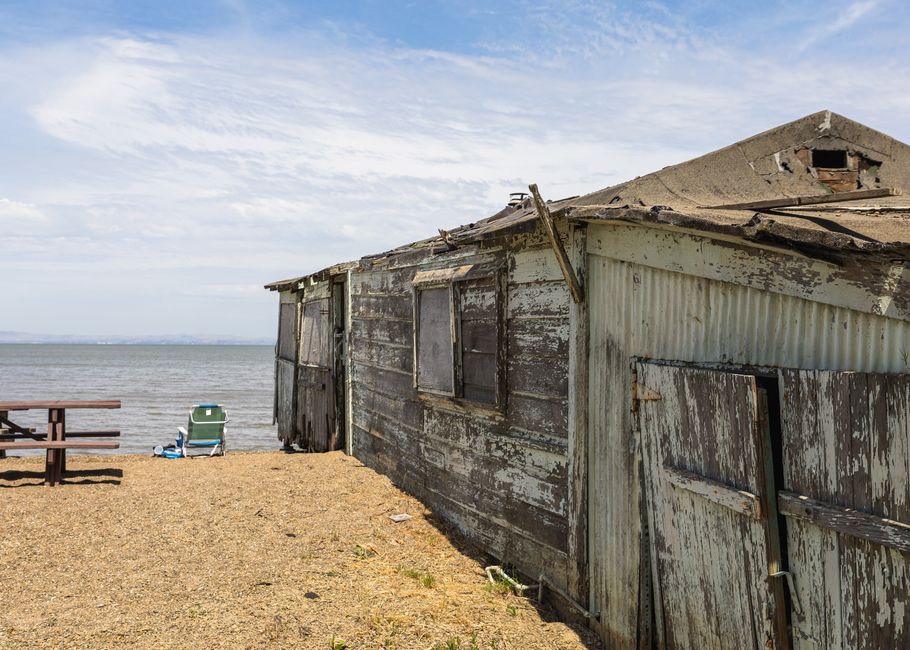
The company, whose roots trace back to 1793, harvests about two million oysters a year from Whitstable’s seabeds, with half of the catch sold along the south coast through its hotel and four seafront restaurants. Green’s current application involves extending the seating of the Forge, an oyster shack, onto a stretch of beach that has long been used by members of the Whitstable Yacht Club to store boats. More than 200 objections have been submitted, including from the Environment Agency, which has raised concerns about impact on flood defences. Some residents have labelled the proposal ‘a carbuncle’ and a ‘horrifying visual, physical and commercial intrusion’, while others said it would be disastrous for the King Charles III coastal path that runs along the shore.
The plan is the latest flashpoint in a long history of friction between the company and parts of the local community. Whitstable’s oyster industry once produced about 80 million oysters a year in the mid-19th century, but collapsed by the 1970s due to overfishing, pollution and imported diseases. Green’s father bought the barely functioning firm in 1976 with just one employee. It was James Green and his brother Richard who launched industrial-scale farming of non-native Pacific rock oysters in 2008, helping revive the town’s reputation as ‘Britain’s Oysteropolis’. Green says the business now employs 200 people and could take on more, and argues the new beach seating would let visitors enjoy ‘half a dozen oysters and a glass of muscadet’ on the sand.
Paul McNally, speaking for the Whitstable Beach Campaign group that previously fought against the company’s oyster racks, said there was no justification for extending the Forge onto the beach. He said the campaign’s aim has long been to protect the unspoilt nature of the beach and maintain public access, both of which would be compromised. Green, who spent £1 million on his earlier planning application for the oyster racks and faced a failed licensing bid for a similar extension five years ago, senses a ‘general antipathy’ toward his company and a lack of realism about economic challenges. A district judge in a previous appeal described him as an ‘able and determined businessman’ who had nonetheless generated ‘some public animosity’ and become a source of tension, even open hostility, within the community.
Green remains defiant. He notes that the Whitstable Yacht Club, which leases the beach area from his firm, has now withdrawn its objection after being offered a better lease in exchange for giving up some space. ‘The Whitstable economy is based on tourism, like it or lump it,’ he said, insisting that towns must give people reasons to visit. He dismissed the opposition as ‘completely bonkers’, pointing out that he is not proposing flats on the beach but simply decking and a pergola.