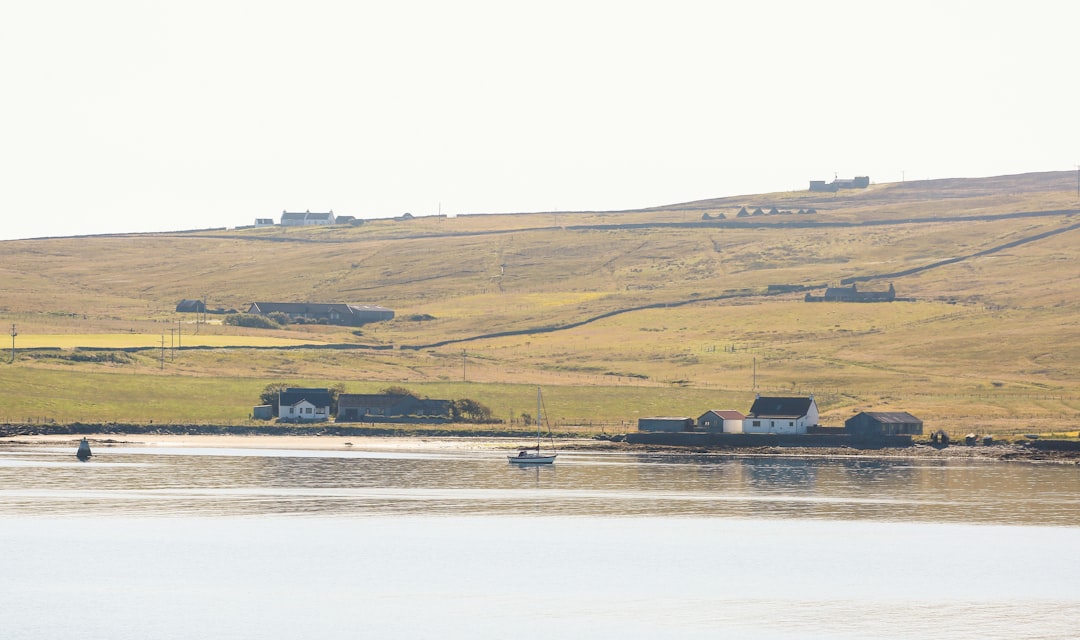
Plans for a colossal datacentre in the Scottish village of Auchtertool, Fife, have drawn more than 1,600 objections. The proposed facility, about 21 miles north of Edinburgh, would rise 35 metres high and cover an area larger than 100 football pitches, with developers describing it as the world’s second-largest datacentre. The size of the 600MW project, which would tower over local stone houses and block views of fields and woodland, has galvanized the community.
Local politicians say the resistance is unprecedented. David Torrance, the Scottish parliament member representing the village, said he had not seen this level of objection to a local plan in his 25 years in politics. Similar grievances are mounting in other Scottish towns, including Airdrie and Larbert, as parliament returns from its summer recess. Campaigners warn that the backlash could complicate Britain’s broader AI ambitions, which depend on vast computing infrastructure.
UK officials have recently encouraged datacentre developers to consider Scotland, pointing to the country’s abundant energy and water resources. In April, Fintan Slye, chief executive of the UK’s National Energy System Operator, publicly invited large datacentre operators to approach him if they wanted to build in Scotland. But as Torrance noted, England’s grid is under strain and the country is in drought, making Scotland an attractive destination for developers even as local communities object to the scale of what is proposed.
The Scottish government has begun tightening oversight in response. This week, the minister for public finance issued new directions requiring planning authorities to notify the government of any datacentre application larger than 50MW — equivalent to more than a twelfth of Auchtertool’s size. Certain projects, including Auchtertool, must now also submit an environmental impact assessment, a requirement developers had previously argued they should avoid. Kat Jones, director of the charity Action to Protect Rural Scotland, called these measures “obvious, bare-minimum” rules, but said they represented a meaningful shift toward closer scrutiny.
The political pressure is set to intensify. Campaigners plan a large demonstration in Edinburgh in early September, shortly after the Scottish parliament reconvenes, and have called for a full moratorium on datacentre development. This summer, the Scottish National party’s national council backed a motion to freeze all new datacentre projects that have not yet received planning permission. Several weeks ago, Police Scotland warned a developer that public anger over datacentres could lead to security risks and incursions, reportedly a first for the UK.
Developers argue the projects would deliver lasting economic benefits. Mark Wilson, chief executive of ILI Group, which is behind the Auchtertool proposal, told the BBC that local opposition was fueled by misinformation, suggesting much of it came from the United States. He described the datacentre boom as a once-in-a-lifetime opportunity for Scotland to become a global hub while acknowledging that most schemes currently in the planning pipeline would likely never be built. Separately, Data Vita, which is developing an AI growth zone in Lanarkshire, has received an investment package that includes a £202m guarantee from the National Wealth Fund, though investigative reporting has cast doubt on the viability of its power-generation plans.